

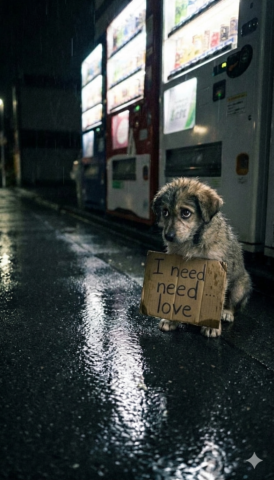
It is a scene that plays out in thousands of dark alleys, neon-lit city streets, and rain-slicked corners across the globe: a lone, shivering creature crouching against the cold infrastructure of human civilization. Wet fur matted by the storm, eyes wide with a devastating mix of terror and confusion, a stray dog watches the world hurry past. In their gaze lies a question that humanity has spent centuries evading: How did we leave our most loyal companions behind?
Dogs do not choose the streets. They are the products of human choices—domesticated, bred to rely on us for food, shelter, and companionship, and then systematically abandoned when they become inconvenient. When we ignore a stray dog shivering under a vending machine or trembling on a sidewalk, we are not merely passing by an animal; we are turning our backs on a historical pact of mutual trust and protection.
The Emotional Depth of a Forgotten Life
Science has definitively proven what dog lovers have long known intuitively: canine emotional intelligence is profoundly complex. Dogs possess the capacity to experience joy, grief, anxiety, and deep attachment. When a dog is abandoned, they don’t just experience physical hunger; they experience the acute psychological trauma of rejection.
They wait for hours, sometimes days, at the exact spot where they were left, convinced that the person they loved will return. As the reality of their isolation sets in, fear takes over. Every sudden noise, every passing vehicle, and every downpour becomes a threat to their survival. The physical deterioration of a stray dog is rapid, but the breaking of their spirit is the true tragedy.
“To look into the eyes of an abandoned animal is to realize that cruelty doesn’t always wear a violent face; sometimes, it is simply the act of walking away.”
The Crisis by the Numbers
The scope of stray and abandoned animal distress is staggeringly vast, cutting across urban and rural landscapes alike. The metrics of neglect demonstrate that community intervention and systemic compassion are desperately required to stem the tide of suffering:
-
200 Million: The estimated number of stray dogs worldwide enduring hunger, disease, and weather extremes daily.
-
3.1 Million: Dogs entering shelter systems annually in the United States alone, waiting for a second chance at life.
Why Caring is an Absolute Imperative
Caring for stray and vulnerable dogs is not an act of optional charity; it is an obligation born of our shared history. Domestication stripped these animals of their wild survival instincts, replacing them with a biological need for human stewardship. When we allow them to suffer in our streets, we diminish our own collective humanity.
Furthermore, a society’s treatment of its most vulnerable animals is deeply linked to its internal health. Communities that establish robust welfare networks, active trap-neuter-return programs, and well-funded sanctuaries experience lower rates of public health hazards and foster a broader cultural empathy that extends to human interactions as well.
How to Mirror Compassion with Action
Turning heartbreak into hope requires small, consistent changes. You can support local no-kill shelters through volunteering or funding, advocate for stricter anti-abandonment laws, choose adoption over purchasing from breeders, or simply offer food and dry shelter to a stray in your neighborhood. Giving an animal a second chance does not just rewrite their future—it restores a piece of the world’s broken compassion.







0 Comment